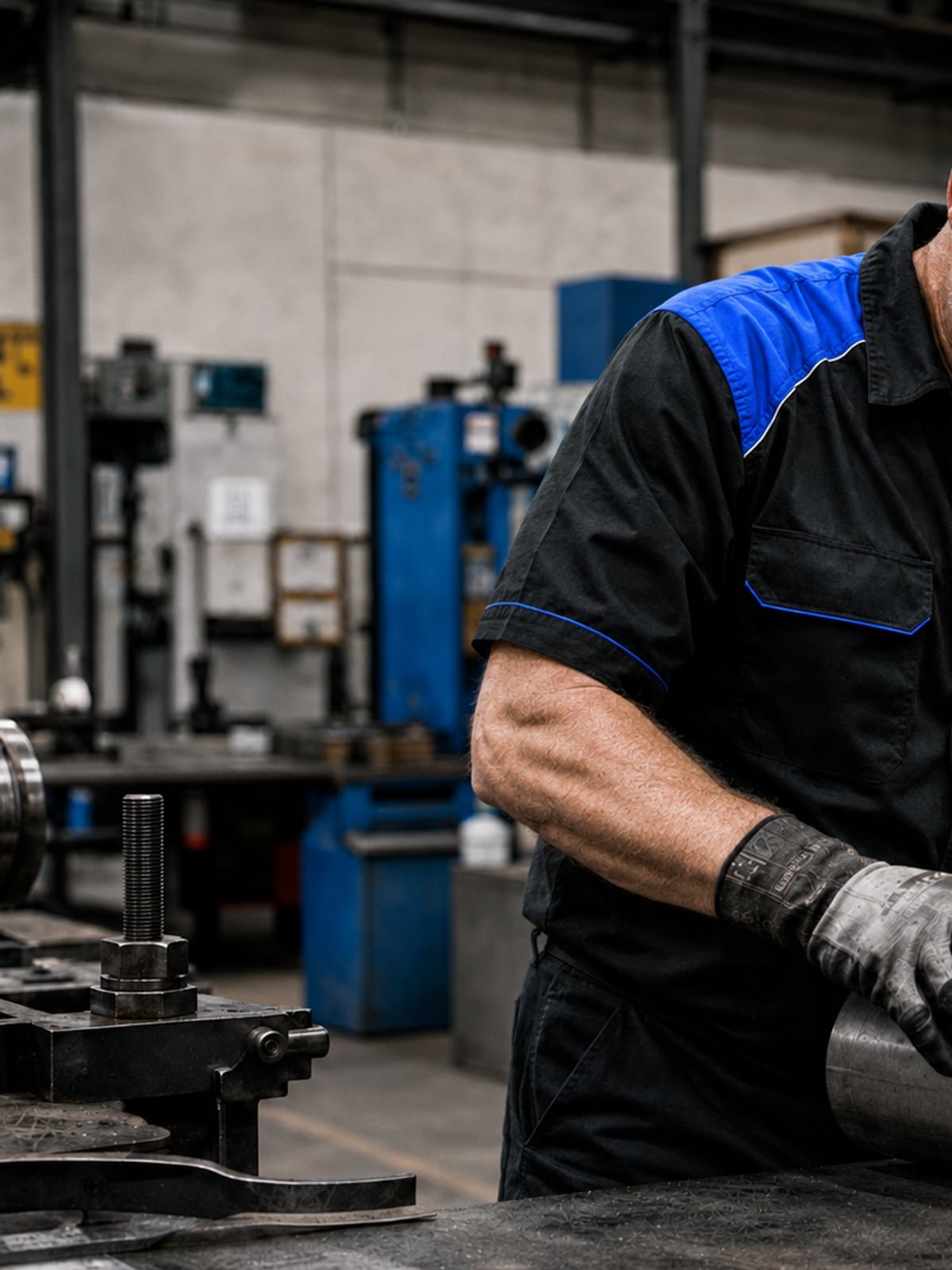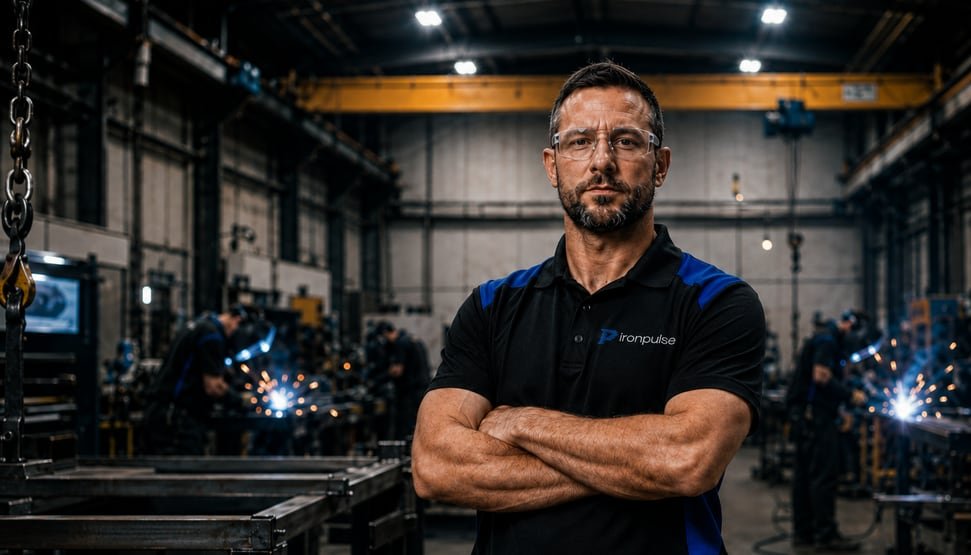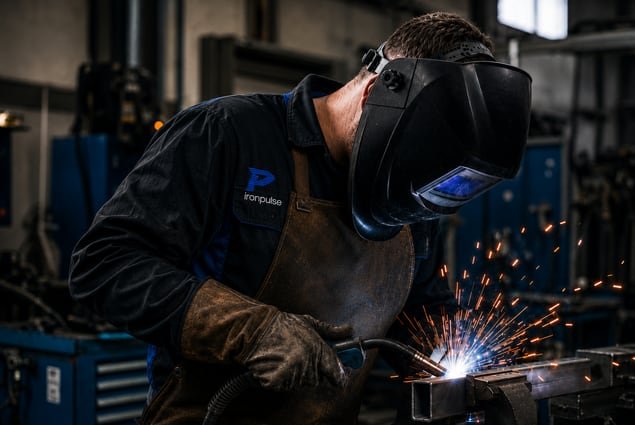
A refinery shutdown is the most demanding industrial exercise there is: 15 to 30 days where every hour is worth tens of thousands of euros, hundreds of external workers inside the fence and an inspector radiographing behind every bead. What decides the outcome is not a machine: it is the composition of the welding crew — who is in it, with which papers and how it coordinates with testing. This guide walks through the typical crew, profile by profile. For the phases and KPIs of the event in general, see our guide to the industrial turnaround.
The typical crew, profile by profile
- Pipe welders (141/111, 6G position) — the hard core. On process lines they run TIG root with stick fill, or full TIG on stainless and alloys; the H-L045 position (the "6G") is the de facto standard because it covers the remaining pipe positions.
- Pipefitters — they prepare, align and tack the joints: isometric reading, cutting, beveling and fit-up. A good pipefitter keeps two welders in continuous production; his absence is the silent bottleneck of many shutdowns.
- Boilermakers — repair of static equipment: vessel plates, cones, shell courses, column internals. They frequently work in confined spaces and feed the structural welding fronts.
- Welding supervisor — the hinge between planning and the scaffold: he distributes fronts, ensures every joint is welded to the right WPS by the right qualified welder, and answers for the progress curve of his package.
- Preventive resource — a mandatory Spanish PRL figure on special-risk work (confined spaces, heights, hot work): he watches conditions and can stop the front. Without him, the work permit does not open.
The starting ratios
Every refinery has its own numbers, but these references serve as a first approximation:
- 1 TIG welder (141) closes 8-12 joints/day on 2"-6" 316L stainless piping.
- 1 stick welder (111) handles 5-8 joints/day on high-thickness piping.
- 1 pipefitter feeds 2 welders in pre-assembly.
- 1 boilermaker per 4-5 welders on the structural fronts.
- 1 supervisor per 8-10 operatives.
And the buffer is not optional: add 15-20% to the calculated headcount. A welder falls ill, a certificate gets failed, a joint is rejected and must be redone. Whoever plans at zero runs late — every time. And calibrate the ratios with your own plant history as soon as it exists: two documented shutdowns are worth more than any generic table.
The usual qualifications and tests
Not every joint weighs the same, and criticality sets the bar: class A lines (high pressure, acid service, high temperature) demand 6G welders with a UNE-EN ISO 9606 qualification matched to the process, material and diameter — and 100% radiography (RT) or ultrasonics (UT). Class B (utilities, low pressure) admits 1G/2G positions and sample testing; class C (supports, structure) settles for basic qualification and visual inspection. Penetrant (PT) and magnetic particle (MT) testing complete the picture on root passes and fillet welds. The buyer rule: the qualification matrix must be validated before arrival — discovering an out-of-range certificate with the scaffold already up costs days.
Coordination with NDT sets the pace
In a shutdown, the non-destructive testing team is not an auxiliary service: it is who releases the joints — and therefore who sets the real pace of the front. Three practices separate fluid shutdowns from clogged ones: planned radiography windows (typically at night, with areas evacuated — every retake on a badly prepared joint steals a window); immediate traceability (joint welded, joint logged with WPS and welder stamp, without waiting for the end of the week); and daily tracking of the repair rate per welder and per front — a rising rate is the earliest alarm that something (parameters, consumable, fatigue) is wrong.
The daily machinery: front meeting and entry test
Two routines keep the crew meshed. The first is the entry weld test: many refineries require every welder, certificate aside, to weld a coupon on arrival — schedule it for induction day so it does not burn the first productive day. The second is the daily front meeting — supervisor, client supervision and NDT in fifteen minutes: joints planned, joints released, repairs pending and blockers. Shutdowns that skip it end up managing by surprise.
Checklist before mobilizing
- WPS and WPQR approved for every process + material + thickness combination in the scope.
- UNE-EN ISO 9606 qualification matrix validated, with six-month confirmations up to date.
- Inspection coverage sized for the peak of joint production, not for the average.
- PRL, medical checks and a preventive resource assigned per special-risk front.
- Lodging, transport and PPE closed before arrival — not during the first week.
- Contingency plan: extra welders on stand-by with a guaranteed incorporation lead time.
The Spanish hubs where all this happens
Spanish refining and petrochemicals concentrate in a handful of hubs — Tarragona, Cartagena, Huelva, Algeciras and Puertollano — and their shutdowns concentrate in the same spring and autumn windows. The practical consequence: the same 6G profiles are contested by several events at once, and the crew is booked months ahead, not weeks. Puertollano adds the inland particularity: with no coastal labor pool nearby, lodging logistics weigh even more heavily in the plan.
What Iron Pulse delivers
We supply complete crews — UNE-EN ISO 9606 homologated welders, pipefitters, boilermakers and supervisors — with the documentation dossier validated before arrival, PPE, lodging and logistics solved and fast replacement during the event. Meet our homologated welders or request deployment for your next shutdown.